 Daily life details from 18th century Paris – influence of Enlightenment, Jansenism, shifts from corporate bodies to individual rights; opening boulevards and public spaces to permit air to circulate; adding house numbers; centralized authority; etc. Interesting and worth reading.
Sunday, January 15, 2006
The Making of Revolutionary Paris (David Garrioch, 2002)
Daily life details from 18th century Paris – influence of Enlightenment, Jansenism, shifts from corporate bodies to individual rights; opening boulevards and public spaces to permit air to circulate; adding house numbers; centralized authority; etc. Interesting and worth reading.


Thursday, January 05, 2006
The Austrians: A Thousand-Year Odyssey (Gordon Brook-Shepard, 2002)

Thursday, December 01, 2005
The Way of the World (From the Dawn of Civilization to the Eve of the 21st Century (David Fromkin, 2000)
 I had liked other Fromkin books quite a bit (Europe's Last Summer, A Peace to End All Peace), but didn't find this very compelling.
The author tries to provide a short overview of the history of civilization. Some useful perspectives but inevitably cursory. He does believe the west generally is on the right track in terms of individual liberty, economic freedom, "progress," etc. But who knows.
Tuesday, November 15, 2005
The Warden (Anthony Trollope, 1855)
 I keep running into references of Trollope being such a famous Victorian novelist, so I thought I would try one of his books. It didn't leave me rushing to try more, though I may do so at some point.
This book was the first of a set known as the "Baretshire" books - often revolving around the clergy. In this one, the application of Anglican church revenues is challenged by a do-gooder; the beneficiary of the revenue is conflicted; unexpected romance. Etc.
Tuesday, November 01, 2005
Don Quixote (Miguel de Cervantes, 1605)
 2005 being the 400th anniversary of this famous book, I thought it was time to read it. So I did.
Basic plot is well known - the protagonist reads too many novels about chivalry and pretty much goes out of his mind; then pursues various adventures with Sancho Panza. Dulcinea, windmills, practical jokes, etc.
I pretty much achieved nothing other than reading the stories and enjoying them (Part 2 more than Part 1, though to be honest there were plenty of slow parts). When you read about the book, there is all sort of commentary explaining why it was ground-breaking. But this is hard for me to discern while reading.
The Nobel Institute supposedly voted for this as "The Greatest Book of All Time." Wow?
Cervantes fought at Lepanto, which is pretty neat.
Tuesday, October 25, 2005
Collected Stories 1911-1937 (Edith Wharton)

800 pages of short stories. Mixture of WWI era, NY “society,” ghosts, European. I actually enjoyed these quite a bit. Author was from NY money and seems to be writing about the many and varied things she’d seen.
Friday, October 14, 2005
Where Angels Fear to Tread (E.M. Forster, 1905)

Thursday, September 15, 2005
Karl Marx: A Life (Francis Wheen, 2001)
 Biography written after the demise of communism.
 Focuses on early radical days in
Jenny = wife; noble birth.
Brilliant; constantly out of money, constantly supported by Engels.
Several children, several early deaths; fairly regular episodes of poor health; procrastinator as a writer (esp. w/r/t Capital).
Pretty much tried to (and did) live a bourgeois lifestyle.
Effective in the various socialist organizations but seldom got along well for long with folks. He was around for the 1848 revolutions; admired
Thursday, September 01, 2005
The Sun Also Rises (Ernest Hemingway, 1926)

I understand this is the book that made Hemingway famous, led to folks imitating his spare writing style, etc. I didn't like it very much, far prefer For Whom the Bell Tolls and A Farewell to Arms.
Thursday, August 25, 2005
Chuchill’s Folly (How Winston Churchill Created Modern Iraq) (Christopher Catherwood, 2004)

Probably to make the book more salable, author tries to pin
- Sunni = 80+% of Muslims worldwide.
- Shiites =
- Kurds tend to be Sunni, ethnically close to Iranian.
- Arab-centered in
- Mongols take
- “Turkification” starts around 1900; WWI intervenes.
Wednesday, August 03, 2005
Stonehenge (Bernard Cornwell, 2001)
 Summary below. I actually enjoyed this one quite a bit even though it's not in my normal reading zones. It did drive imagination as to what might have been going on with Stonehenge.
Another Cornwell novel, also well researched (as far as I know), also via audio book while commuting.
_______________
"He imaginatively unlocks the mystery of Stonehenge's creation in 2000 B.C., at the beginning of
Monday, August 01, 2005
For Whom the Bell Tolls (Ernest Hemingway, 1940)
 My favorite of the Hemingway novels.
Robert Jordan (an American fighting on the side of the Republic) is assigned to blow up a bridge in the Spanish Civil War (covered in detail in this book). He works with local partisans. Pilar (steady older woman) is married to Pablo (unsteady partisan leader). Jordan falls in love with Maria. Interesting story line about Jordan's family history.
Hemingway was in Spain for much of the civil war and elements of the book supposedly are based on incidents he observed or heard about.
Like A Farewell to Arms, characters are disillusioned about war and war leadership.
Monday, July 25, 2005
Tales of Courage and Conflict (Leo Tolstoy, various stories from 1842-1893)

Large collection of shorter works.
His writing is fantastic. The Sevastopol sketches are wonderful war stories. Numerous similar examples.
Saturday, June 25, 2005
The War of the Worlds (H.G. Wells, 1898)

Read somewhat in anticipation of Spielberg movie starring Tom Cruise released June 2005.
I enjoyed it more the first time I read it, decades ago.
Never did see the movie, the reviews were not good.
Wednesday, June 15, 2005
Sentimental Education (Gustave Flaubert, 1869)
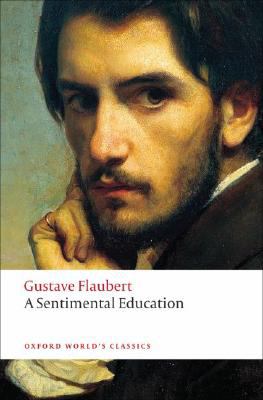 "Based on Flaubert’s own youthful passion for an older woman, Sentimental Education was described by its author as "the moral history of the men of my generation."
It follows the amorous adventures of Frederic Moreau, a law student who, returning home to
Blending love story, historical authenticity, and satire, Sentimental Education is one of the great French novels of the nineteenth century.”
He also hangs out with “the Marshal,” and the widow of a wealthy banker; also a girl from his hometown. Also hangs out with friends, including deLorrier. Historical context = 1848 revolutionary atmosphere, founding of the Second Empire.
Listened to this in a "books on tape" format.
Subscribe to:
Posts (Atom)