"To compensate a little for the treachery and weakness of my memory, so extreme that it has happened to me more than once to pick up again, as recent and unknown to me, books which I had read carefully a few years before . . . I have adopted the habit for some time now of adding at the end of each book . . . the time I finished reading it and the judgment I have derived of it as a whole, so that this may represent to me at least the sense and general idea I had conceived of the author in reading it." (Montaigne, Book II, Essay 10 (publ. 1580))

Thursday, December 27, 2018

Coromandel - A Personal History of South India (Charles Allen, 2017)

(370 pages)

Looking for materials focused on southern India - this is a new book by an author not previously encountered.

He goes through quite a bit of history - my background is still too weak to follow along effectively.  I learn that Buddhism and Jainism were forces - including in the south - before Hinduism pretty much displaced them.  (Though he mentions the Jain temple we visited, with a photo-with-fig-leaf.)

Ashoka and his rock edicts are discovered in the south.  Kalinga - war elephant story.  Roman traders (some coin hordes are found) - purchased spices with coins, not having goods that the Indians were interested in trading for.  Coins apparently typically melted into jewelry etc. since not really useful as such.

Lord Shiva, Lord Vishnu.  This part remains confusing - Lord Vishnu with 10 avatars, etc.

Discussion of arrival of Europeans.

The author calls it a "personal history" because he has personal connections to India and isn't trying to be comprehensive - it bounces around quite a bit, I will keep this at hand and page through it some more.

Wednesday, December 12, 2018

The Story of the Jews - Belonging - 1492-1900 (Simon Schama, 2017)

(692 pages)

Second volume of a series; first volume is noted here.  These are well worth reading.

The ability of "the Jews" (which I'll treat as a single category even as I learn a bit more about differences within the category) to stick to their religious principles - and thus their separateness - is amazing, unprecedented.  Even, or perhaps especially, in light of what that "separateness" has entailed over the centuries.

This volume picks up with 1492 - expulsion from Spain.  Amsterdam as a relative haven.  Others escape east.  "Conversos" are treated, or mistreated, with great suspicion in Iberia; some defy restrictions on movement, capital flight.  These are referred to by the author as "Sephardic" - tend to be more educated on balance.  I don't know the exact definitions; he uses "Ashkenazi" more in association with central/eastern European communities - tend to be shtetl types, less educated, less able (or willing) to assimilate.  But of course so many exceptions.

He mentions a community in Kerala (Cochin).  Traders, connections, everywhere.

Western Europe consistently uncongenial - will use Jews for finance but turn on them as needed.  Amsterdam an exception.  Areas in eastern Europe - Poland, Russia, Bohemia - welcome Jews (needing their population and their skills) and surprisingly often follow through on commitments to leave them alone (not always, even in the best (most tolerant) of times).  Population expansion in these areas - eastern Europe as a major Jewish population center, who would have predicted this in Old Testament times?

Enlightenment - hopes rise - many community leaders pursue assimilation in hopes of avoiding mistreatment.    So many restrictions on occupations, where to live.  Always allowed to practice medicine - utilitarian.  Enlightenment era beliefs that if these occupational and residential restrictions are lifted, Jews will be more "normal" members of the community.  But the old hatreds appear irrepressible.  Alsace/Lorraine (Dreyfus territory) - ugh. 

This volume takes us up to 1900 - in late 19th century, hatreds are escalating again, as are efforts to secure a homeland.  It's little wonder that the latter strategy was pursued.

An embarrassing history for Christianity in so many ways.

Monday, December 03, 2018

Eating Animals (Jonathan Safran Foer, 2009)

(267 pages)

Book club selection (via Rose; session held 2 December 2018).

Interesting writing about the modern ag/food industry - so much has changed!  Food incredibly cheap and plentiful.  But animal cruelty questions; hormones and antibiotics; climate effects. 

Regulatory capture as in any major industry.

The club discussion was interesting.  How far to go with empathy for the animals - who are headed to slaughter no matter what - effect on low-income folks if practices are changed?  How to quantify climate effect - supremely efficient food chain - is there a better alternative?

Author did a good job but occasionally strays into childish demonization of "profit."

Quite a bit of overlap with some of the themes from this book about Storm Lake, Iowa.  Confinement set-ups certainly have changed rural Iowa even in my lifetime.  And I beheaded a few chickens here and there without thinking twice about it.

Wednesday, November 28, 2018

Tribe - On Homecoming and Belonging (Sebastian Junger, 2016)

(136 pages)

Short; built atop a Vanity Fair article; thought it might be of interest as I try to be more thoughtful about group or tribe behavior.  Author served as a correspondent from several war zones - not military, but constantly around military and in combat areas.  PTSD.

Main thesis - he observes the closeness of soldiers - or even civilians in war zones (Sarajevo) - then he provides some historical examples (London during the Blitz) - the connectedness, how many feel these were the best times of their lives notwithstanding the horrible parts.  Suicide rates drop in these horrible situations, etc.  Then he focuses on evolution - thinking back over millennia - where humans evolved in small bands regularly dealing with common threats, again close connectedness - this is the normal, this is how we're wired.  Then he focuses on the atomization of modern society - wealthy sure, but loss of connectedness.  Examples like 9/11 - where there was a short-term sense of connection - but quickly dissipates.

Most of us will never be called upon to protect ourselves or our loved ones or our communities against an actual imminent threat - everything outsourced to military and police.  A good approach but author points out the immense change from the environment in which we evolved.  Discourages connectedness.

None of this is new, but he has an interesting and useful perspective.  We're not going back in time, so we need to consider how better to connect, and how to be more patient with the frustrations experienced by the disconnected.

He compares the experiences of WWII vets to the current crop - much dislikes "thank you for your service" platitudes, recognition at sporting events - he feels vets want to be re-integrated (especially in the job market), not to have their separateness emphasized.

Thursday, November 15, 2018

Storm Lake - A Chronicle of Change, Resilience, and Hope from a Heartland Newspaper (Art Cullen, 2018)

(317 pages)

Author is my brother-in-law - who won Pulitzer Prize for editorial writing in April 2017 - obviously quite an achievement.  This leads to book opportunities with top publishing houses - they eventually settle on Viking (which the frontispiece tells me is an "imprint of Penguin Random House") i.e. a real deal.

The guy can write.

I cannot evaluate the book in any objective manner (of course I'm not a professional (or even amateur) reviewer anyway so who cares - I keep this website as a memory aid anyway).  Some reasons why an objective evaluation is impossible:

  • There are quite a few family references interspersed throughout - I very much enjoy the way they are handled.  Especially the interactions with my dad - which are fairly significant to the exposition - Art captures him quite well!  These passages are highly interesting to me.
  • Then there are all of the Iowa references, including many from the 1960s or 1970s - author's path has more overlap with mine than I had realized - again, highly interesting to me.
  • I came to the book with a decent level of familiarity with Storm Lake's unique demographics and challenges (and opportunities) - so pretty well versed on that part (meaning I read through these pages pretty quickly).

For readers who pick this up "cold" - I expect there's quite a bit to learn via the Storm Lake story - this at a time when immigration issues are front and center - quite a few positive aspects here.  Also for this group of "cold" readers - I hope they can relate somewhat to the story elements revolving around the family.  Hard to know.

Useful discussions of the evolution of agriculture and resulting social changes.

Perhaps my main reaction:  deeply grateful that someone with actual writing skills has chronicled a few of the pieces of our family's story line.  That is highly valuable to me.

Art & Dolores have a lot to be proud of.

Friday, November 09, 2018

In the First Circle (Aleksandr Solzhenitsyn, written between 1955-1958; this translation 2009)

(741 pages)

Solzhenitsyn is amazing - a favorite.

First read this book almost 13 years ago in a version that Solzhenitsyn had self-censored in hopes of getting it published in the USSR - which didn't happen.  This - the full version - became available in English translation a few years ago.  Delightful re-read; the full version is an improvement (though I was thoroughly satisfied with the first version that I had read).

Not difficult to see why many compare his works to those of Dostoevsky - prolonged discussions of ethical or philosophical matters; stand-alone chapters; many characters interacting.

Solzhenitsyn so effective at weaving into the story the effects of the socialist system on persons from all walks of Russian life - not just the prisoners - returning veterans, stranded spouses (typically wives), the stress on the jailers and officials, Stalin's loneliness, etc.  Pretty much everything corrupted.

Innokenty's decision.  Lubyanka.

Zeks in the sharaska live so well compared to the camps (after all, it's only the First Circle! (yes it's a Dante allusion)) - but facing ethical decisions - typically the scientific projects involved devices used to imprison folks! - is it ethical to assist with this project - when succeeding at it might be the zek's only hope of ever being released from the gulag (with profound positive implications not just for the zek - but also for the stranded spouse and other family members)?  Returning to the camps if fail or refuse to cooperate?

Main character is Gleb Nerzhin (imprisoned mostly for having spent time as a POW in a German camp) - he faces this ethical issue.  As do Sologdin and Gerasimovich.  Gleb discussing ideas with various folks as he tries to find his way.  As the story progresses, Gleb interacts more and more with Spiridon - a peasant whose story line illustrates the ways that those folks lived through those times, for better or worse.  Some folk wisdom.

Excellent throughout but - as I felt in the first reading - the chapter where Gleb is visited by his spouse (Nadya) - is just a knockout, heartbreaking.  Solzhenitsyn knew about this, had experienced it.  (Following chapter - where Gerasimovich is visited by his spouse - also very fine.)

One of my favorite bloggers recently read this book for his first time, loved it, did a virtual book club on it - so I listened to a couple podcasts - I hadn't realized that Solzhenitsyn's personal background incorporated so many elements of this story.  What a life he led.

The letters from Dyrsin's wife.

Rubin - dedicated communist yet well-liked.

The "relationship" decisions faced by the prisoner and the spouse over so many years - continued marriage to a prisoner almost certainly preventing meaningful education or employment - and opportunities with others - ach.

Etc.  Wonderful - a gift to run across works like this.

Monday, October 29, 2018

The Mill on the Floss (George Eliot, 1860)

(544 pages)

I really liked this.  I'm continually impressed with George Eliot; it's time for another reading of Middlemarch (it's almost been 15 years).  At the moment, this one is my favorite of hers.  It's one of her earlier works.

Characters here are so well presented - all believable, all so well sketched and  developed (with enough surprises along the way).  There were enough characters to fill out the story, but few enough so that this kind of detailed exposition could happen.  [Only exception:  Stephen Guest felt odd but in the end I felt he fit the flow.  (Interesting that at book's end there is a short discussion of what apparently was a great deal of criticism taken by Eliot for the Guest character.)]

--Maggie Tulliver
--Tom Tulliver (Maggie's brother) (these are the two main characters)
--Their parents; Mr. Tulliver likes to go to law; he wants Tom to become educated; Tom's struggles with the clergyman-teacher.

--The Dodson sisters (Mrs. Tulliver was one of these) - esp. Glegg - the voicing on these was utterly uncanny.  And often hilarious.  Also their husbands.  Easy to understand that this was a world Eliot had lived in.

--Lucy Deane - cousin (daughter of one of the Dodson sisters).

--Stephen Guest.

--Lawyer Wakem; his son Philip.

--Bob Jakin - Tom's childhood friend, more of an acquaintance.

The story revolves around Maggie and Tom, but primarily around Maggie.  Realistic, flawed, wonderful character.

Monday, October 22, 2018

Devil in the Grove: Thurgood Marshall, the Groveland Boys, and the Dawn of a New America (Gilbert King, 2013)

(464 pages (including notes))

Book club selection (via CPG; session held 21 October 2018).

This was useful, timely.  Author builds the story around the efforts of Thurgood Marshall (and other NAACP members and supporters) to assist the "Groveland boys" - four blacks wrongfully accused in Florida.  With useful background about Marshall, the NAACP, its legal strategies, the environment in the South.  Florida as a dangerous, volatile state; the local sheriff here was a rather awful character.

It's amazing how recently all this happened; how much progress has been made; I think sometimes we lose sight of this given that plenty of stupid stuff continues.  Something about groups, or tribes, or however it's best described - seems unlikely that humans will ever entirely rise above these divisions.  But hopefully progress can continue.

Some of the details help someone like me, in some tiny way, imagine how it may have felt to be treated this way.  At one of the trials - black visitors at the courthouse eat lunch out on the lawn - guess what, every one of them had brought a paper bag lunch in the certainty that no restaurant would serve them.  This was "normal."

Florida not a cotton state; but once they master frozen orange concentrate there is a big need for workers - guess who was recruited, guess how they were treated.

Also - the risk to whites not toeing the line - including abusive behavior to someone named Mabel Norris Reese (initially a mostly unquestioning supporter of the local authorities but she changed over the years).  Your family, your business, your personal safety.   Examples in wartime, in religious settings, etc.

The extreme danger of sheriffs, police, the prosecutors, the judicial system - so much depends on integrity here.  Post 9/11 adulation isn't helping accountability.

The incredible courage of folks like Marshall (and other then-NAACP staffers and their supporters) - regularly encountering genuine physical danger - difficult to imagine.

Friday, October 12, 2018

Hue 1968: A Turning Point of the American War in Vietnam (Mark Bowden, 2017)

(608 pages (including notes))

We've thought very highly of Ken Burns's (fairly) recent Vietnam War series on PBS; this book had some of the same feeling, but focused on a single battle (though with plenty of helpful surrounding detail).  I liked it a great deal.

Hue as an important historical city in Vietnam - I had no idea - pretty far north in South Vietnam.  A citadel and "old city" portion, heavily fortified.  Cultural/historical significance, meaning US couldn't bomb it.

North Vietnamese Army and Viet Cong meticulously plan to attack Hue as a featured element of Tet offensive - they realize they cannot hold it indefinitely, but believe they can make a real statement here.  And they definitely did.  Took over the citadel - thick walls, limited number of gates, defensive towers, moats - bigtime problems given that razing wasn't an option.

US planners and higher-ups tended to discount Tet in general, and discounted the situation in Hue in particular.  Meaning regular guys are sent into ridiculously dangerous situations due to higher-ups not comprehending, at least in the early going.  Author provides intimate descriptions of what can only be called raw courage - just amazing what these guys were doing - many of them truly "regular" draft fodder - many not particularly fired up to be there, but doing their jobs. 

Some of that reminded of this book - so much courage seems to be bound up with the guys close by.

North Vietnam with zero air power, limited firepower of any kind - necessitating quite a bit of courage and persistence - yet also incredible cruelty, ideological purification messes, etc.

Amazing degree of press access and honesty (and bravery - these folks were in the middle of things) - post-Vietnam I believe the military keeps much tighter control over the reporting, greatly sanitized.

Recommended.

Wednesday, September 26, 2018

The Tales of Chekhov (short story collection, late 19th century)

(620 pages)

Chekhov's reputation is so high that I've been looking around for collections of his short stories; bought this one on Amazon, it's a rather odd collection but nevertheless a fine introduction.

All I've previously read of Chekhov's work - this compilation of his longer stories.  I learn that he is mostly remembered for his short fiction (including items from this collection) and plays.

He must have been an entirely amazing fellow - medical practice, Sakhalin Island days, little things like that in addition to epic writing ability.

Recently saw a quote that seems apt - to the effect that the problem with short stories is that they are so difficult to remember.  That's certainly the case with this collection.  I genuinely looked forward to picking up the book every time I turned to it - that's typically the case, but ran at a deeper level with Chekhov's short stories, not sure why.  I'll stick with the usual explanation - "he sees us" - gently illuminating our foibles, and our wonderful-ness.

I much recall his ability to portray scenes in nature, or landscapes perhaps - the sun, especially when setting or rising; wind, specific birds offering sounds, clouds, bullfrogs, the scene changing as the sun moves, a hot day - this  is not important as his descriptions of his characters - but it helps make the stories entirely immersive.

Wednesday, September 19, 2018

Return of the Native (Thomas Hardy, 1878)

(275 pp)

I like this, though not as much as Hardy novels previously read (this one, and in particular this one).

Entirely set in village/rural/heath-country.  A countryside with which I'm not familiar, but I am pretty confident Hardy did an amazing job of describing - that part alone is captivating.

Diggory Venn is a "reddleman"; the book starts out as he assists Thomasin Yeobright (who had rejected his earlier marriage proposal); we meet her brother (Clym - who is the returning native), Damon Wildeve (proprietor of an inn), Eustacia Vye (thought perhaps to be a witch!), and various of their family members and the villagers.

The characters sort out their relationships.  I like that Hardy creates complex characters; no really bad ones, though the plot line is a little too tidy as it wraps up.


Thursday, September 06, 2018

The Lost City of Z (David Grann, 2005)

(319 pages)

Book club selection (via Nick; session held 5 September 2018).

I like this genre.  But so far had only read about it in the context of the Nile (Alan Moorehead's White Nile and Blue Nile, biographies of Stanley and Livingstone, etc.

It was interesting to think about the differences - the Nile was impossibly difficult, but the Amazon seemed far worse. 

Another point of reference was Arthur Conan Doyle's Lost World - a great story, and modeled to some extent on this adventure.

Story is built around a fellow named Percy Fawcett; he rattles around in British colonial outposts; like famous African explorers, he seems immune to the hardships.  Fawcett becomes convinced that the Amazon formerly supported large cities (or at least one large one), and works to raise funds, launch an expedition, and hope to find it.  Takes his son and his son's best friend on the final effort.

He disappears without a trace; various folks go looking for him (generally with awful results); the author also goes out into the Amazon, after a fashion. 

Wednesday, August 22, 2018

Built - The Hidden Stories Behind Our Structures (Roma Agrawal, 2018)

(271 pages)

I saw several positive reviews so gave it a try.  Interesting but not compelling.

What the author is trying to do:  give non-engineering types enough basic information so that we can look at roads, bridges, buildings and think about some of the foundational principles involved in putting them up.  And it does have that effect, though I don't expect to retain much.

Interesting discussions about the incredible engineering and construction skills of the Romans. 

Didn't realize concrete was such a valuable product (mastered by the Romans, then their methods were lost for hundreds of years).

Pendulums atop tall buildings to offset swaying - who knew?

Interesting discussions of the Pantheon and Brunelleschi's dome.

Elevators can only travel about so far because the steel cables to move them become too heavy. Maybe that's why we had a stop-off on the way to the 80th floor of the Sears Tower back in the day?

Friday, August 10, 2018

The House of the Dead - Siberian Exile under the Tsars (Daniel Beer, 2017)

(378 pages)

While this overlapped with several other books (for example this one on the Decembrists - early exiles; Dosteovsky's exile here; Polish rebels in exile here; Solzenhitsyn here; Chekhov on Sakhalin Island), it was well worth reading - much additional information and perspective.

I hadn't realized the scope of exile in tsarist days.  In the early days - c. 1700 - it was a convenient way to get rid of political opposition - a few folks were sent far, far away.  Then the regime figured out that sending forced labor to Siberia might be a good way to exploit natural resources there (along with rehabilitating the exiles).  Then the regime started expanding the variety of offenses that gave rise to exile - a great way to get rid of undesirables.  But the system had very limited resources, and the numbers sent into exile simply overwhelmed it.  The goals were not achieved and, if anything, Siberian development was retarded.

For a long period, those exiled walked prodigious distances to their final destination -Tobolsk to the Nerchinsk silver mines was 3570 km (like walking from Madrid to St. Petersburg, or from Washington DC to Salt Lake City).  Lots of folks don't make it - limited accountability as exiles are handed off along the route.  (Compare Brits transporting folks to Australia - a single captain with a single medical officer on a single ship - survival rates improved dramatically once rules were put into place.)

Early arrivals sometimes found Siberia refreshing - people less beaten down than the serfs - but the flood of exiles and the constant exposure to doubtful types changed this over time.  Many political exiles who weren't particularly violent or dangerous - but many, many criminals who were.  A bad mix.

Often often no right of return - settle in Siberia after sentence, if survive - difficult.

As the 19th century proceeds and the numbers continue to increase - the Siberian experience produces flashpoints for resistance to absolutism.  This escalates into the early 20th century - many key figures in 1905 and 1917 were here.

Epilogue introduces how 1917 revolutionaries - ardent opponents of the exile system - adapted it for their own purposes after taking power.  With horrific efficiency.

Thursday, August 02, 2018

The Forge of Christendom - The End of Days and the Epic Rise of the West (Tom Holland, 2008)

(413 pp)

Had recently read this book by the same author - it focused on what I'm calling "late antiquity".  I don't think the current book is part of a series, but it does pretty much pick up fairly shortly after where the prior book left off.
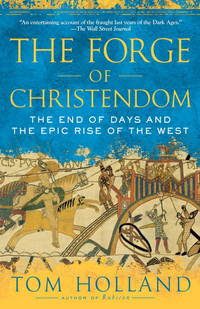
Something I notice - the titles of these two books are rather sensational; fortunately the content is useful, measured.

Europe as a backward dump compared to Persia, Constantinople, Spain, Baghdad, etc.  Charlemagne (following on the achievements of Charles Martel - Tours 732) - tries to restore a Roman empire - centered in the north but with affirmation in the south (Italy). Doesn't last long.

The papacy as a weak institution - not recognized as having much authority over anything - based in a town that had fallen into disrepair.

But perhaps this helped in the long run - separating religious leadership from civil - compare caliph, Constantine in an earlier era - theocratic structures don't birth innovation or free thinking.

The papacy starts to rise from its weakness.  Pepin/Charlemagne looking for validation - turn to the beleaguered bishop of Rome.  Over a few centuries, the pope takes control over appointment of bishops etc.  Takes a run at interfering in civil authority situations - but not nearly enough power.  But the administrative papacy is on its way (the build-up eventually contributing to the Reformation).

Author reviews various of the European kings in the run up to 1000 AD  and the years thereafter - an atmosphere where the end of the world was considered a live possibility.  Christianity making incredible territorial strides - huge land masses in Poland, Russia (though it apes Constantinople rather than Rome), eastern German areas.

These kings aren't all that powerful in their domains - civil order not in good shape in Europe - power ceded to castle-builders (this was new).  Exploitation of peasants; widespread violence; for all its warts the church does fairly regularly make a stand for the oppressed - the Peace of God is enforced after a fashion.  But states starting to be identifiable. 

I underestimate how important and influential the Norsemen, or Vikings, or whatever were in this era - they were traveling pretty much everywhere in Europe and settled down in some form or fashion in many areas (including southern Italy, Normandy, Russia).

1066 - discussion of Hastings.

1095 - Constantinople under stress; pope calls the First Crusade.