"To compensate a little for the treachery and weakness of my memory, so extreme that it has happened to me more than once to pick up again, as recent and unknown to me, books which I had read carefully a few years before . . . I have adopted the habit for some time now of adding at the end of each book . . . the time I finished reading it and the judgment I have derived of it as a whole, so that this may represent to me at least the sense and general idea I had conceived of the author in reading it." (Montaigne, Book II, Essay 10 (publ. 1580))

Sunday, January 21, 2007

Enemies, A Love Story (Isaac Bashevis Singer, 1972)

Listened to this book on tape. Never read anything by Singer before and probably will try more. Very odd plot here. Polish Jew hides in a hayloft for three years during Nazi occupation. Had bad relationship with wife before this; the wife and his two children are shot in a Nazi camp. He marries the peasant/servant girl who fed him and sheltered him in the hayloft, and moves to New York (Coney Island). But he's not in love with her; instead is in love with the beautiful and mercurial Masha, who lives with her mother.

He lies to the peasant that he is a book salesman and needs to travel regularly; spends this time with Masha. Then his wife shows up in America - she had been shot but somehow survived. Somehow they have a very strong relationship after their experiences.

I can't say I've read anything quite like this. Interesting to have the perspective of camp survivors in America. Some of the dialogue, especially with Masha, is quite funny. Overview of loss of faith by folks swept up in the camps.

I guess this was made into a popular movie pretty recently, I need to check it out.

And why was there such a large Jewish population in Poland? Doesn't seem like a natural destination. This book talked about how the Jews were blamed for the black death in the 14th century - poisoning the wells, the usual scapegoat stuff, etc. - and were welcomed by Polish nobles while being expelled from western Europe. The Polish nobles needed the administrative skills etc. No idea if that theory is accurate, there probably were plenty of other persecution incidents (including Polish when it was convenient for them).

Monday, January 15, 2007

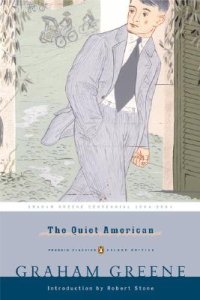
The Quiet American (Graham Greene, 1955)

An English reporter living in Viet Nam during time of fighting between French and Vietnamese (Communist) is the narrator. Mid-1950s. The narrator had pretty much "gone native," living with a local woman, regularly taking opium, etc. An American arrives as an economic attache; actually doing undercover work for a "third force" - an unreliable local warlord - in an effort to stave off the Communists. American steals girl from narrator (to his great disappointment) and saves the narrator's life when they are stranded in open country. Narrator recognizes unreliability of naive American, could be said to have a hand in the American's assassination. But he does get his woman back.

I liked this a lot. Never read anything by Graham Greene before and don't know a thing about him. The introduction to this edition of the book said he grew up in the public school tradition of service and would have believed in Britain's historic international role. I'll read more. His bio is here. The book gave one man's take on the situation in Vietnam.

I was listening to a song by Nanci Griffith, who I like a lot, at the gym this evening. She is active in Vietnam veterans' matters. (In fact, during her appearance at the Alaska Folk Festival in 2006, it was reported by one Carol Gales that she yakked about that type of thing too much and didn't sing enough.) Anyway, she mentions the name of this book and the author a couple times in one of her songs about Indochina.

Sunday, January 14, 2007

Piano competition


For the second year in a row, Patricia and I attended the Schimmel Bosendorfer USASU piano competition (now that's a mouthful) at Katzen Hall at Arizona State University. This year, we suckered Paul Jr. into accompanying us. The concept is great for the audience -- it combines interesting, nicely-performed piano music with a competition setting. There are three divisions. The "junior" group is fun - kids 16 and under - absolutely amazing what they can do. I include the program notes for Min Soo Hong, who was the most entertaining perfomer of the entire evening. A 13-year-old kid who really went for it. The "senior" group is up a distinct level in quality. I also include the program notes for a young lady from this group who performed well, but she was especially noticeable because of her, let's say, unusual facial expressions and overall contortions.

The adjudication sessions are open to the public but we didn't make it this year. Patricia went last year and I hope we can get to one next year.

(Note the photo of the happy attendees taken with the camera in my new phone - a new era for me in photojournalism.)

This is a nice event which likely will recur annually. I hope it does.

Wednesday, January 10, 2007

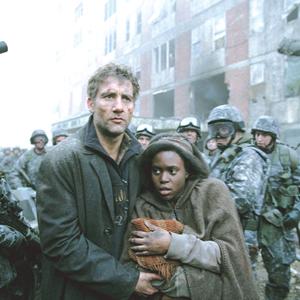
Children of Men

Rare occurrence - we went to the theater and saw a really excellent movie. The premise is that the entire world lost fertility in 2009. The movie is set in Britain in 2027, by which time the absence of children has been felt around the world in similar ways. Basically, people have given up hope - they see no future. Riots, destruction, "the end is near" behavior. Britain "soldiers on" and is seen as a relatively safer haven; thus, it is swamped with immigrants. Britain responds by agressively rounding up, and deporting, illegal immigrants. You can read about the lead characters and the plot in reviews such as this one. A former activist becomes a bureaucrat; he ends up sheperding a pregnant woman (pregnancy being a miracle) to a safe haven while fending off a terrorist group and police.

It was just excellent. There was a chase scene where a car is rapidly reversing down a road while trying to evade motorcyclists; I still can't figure out how they filmed it. Near the end, the lead actor is escorting the pregnant woman out of a building where the terrorist group has holed up and the army is shelling with tanks etc. This definitely was the best scene in the movie. Thoughts: 1) It reminded me of the Stalingrad book - great filming of fighting that goes beyond floor-to-floor urban fighting, it's literally room to room. 2) Again, there was something unique about the filming - it was like a single camera following the action, something like you would think a film crew embedded with the military would do. 3) The scene where he walks out with the woman through the terrorists and then through the military - the identical reactions of the fighters - this is really well done.

Chris, Patrick and Paul Jr. accompanied Patricia and me. Then we had dinner at Elephant Bar. (Where the service didn't measure up to the movie.) But it was a fine outing.

Saturday, December 30, 2006

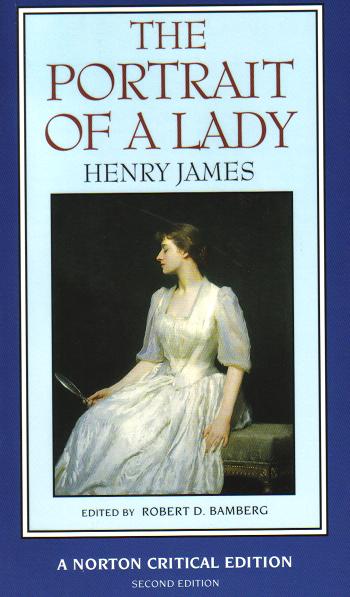
Portrait of a Lady (Henry James, 1881)


This is considered one of James' best novels. A young American lady (Isabel Archer) is brought to England after her parents die; she meets various upper crust types and receives a large inheritance from her uncle (at the request of her cousin, who was in love with her and thought the money would make her independent). She turns down marriage proposals from an American businessman and an English lord - supposedly wants to be free, explore Europe and beyond, etc. Ends up heavily influenced by an American expatriate (Madame Merle) that she meets in England, and marries another American expatriate (Gilbert Osmond) mostly through Merle's influence. She was used, in large part for the money that was supposed to help her remain free.

The book was pretty long, but very little action - lots of conversation, the heroine thinks about things etc. Lots of James' usual portrayals comparing and contrasting American and European ways (he lived on both sides of the Atlantic). In the end, I'm not a huge fan of his.

But this book was quite good. They made it into a movie in 1996, but it was criticized as too "talky." Small wonder, it's hard to see how this would transfer well to the screen.

Sunday, December 10, 2006

After the Victorians (A.N. Wilson, 2005)

Third book by Wilson within the last year or so, and I have really enjoyed each. This one starts around the time of Queen Victoria's death (1901) and traces U.K. history into the 1950s. I really can't tell the strategy for this book. Wilson seems to know quite a bit about almost everything, and throws it all in. So there are portions that lose me - discussions of plays, architecture, design, science - but in the end it all works just fine as far as I'm concerned.

I like the guy's writing because he endlessly puts opinions out there - whether or not you agree, it's interesting and makes you think. It was fairly long, 500 pages, and good material for reading at the gym.

The story goes through World War I; celebrations of empire at a time when its demise was pretty much inevitable; disturbances in Ireland; World War II; lots about Churchill (who is more amazing every time you read about him); loss of empire (India in particular); etc. He walks through the thesis that England quite possibly could have made peace with Hitler after the fall of France; Hitler did seem to have a reluctance to attack England and an affinity for things English; it was believed he may have been content to dominate Europe/Western Asia and let England continue to run its empire at the margins. That quite probably is fantasy, but what is true is that England watched itself become irrelevant while behaving quite heroically throughout WWII.

It's interesting to hear him discuss the English schools and the administrative class that rose to prominence in the latter days of the Empire. I'm reading a book by Graham Greene right now, he's described as coming from that world.

Wilson's bio of Tolstoy is summed here.

Tuesday, November 28, 2006

Stalingrad (Antony Beever, 1998)


So much has been published about Stalingrad, but I certainly never get tired of it. This author supposedly had access to previously-unavailable archives in both Russia and Germany. Beever goes into quite a bit of battle detail, but focuses more on the “way it felt” for attackers, defenders, civilians. Many quotations from letters and diaries. Some of the letters were from German soldiers and were in Russian archives after the Russian victory; the Nazi censors wouldn’t have allowed them to reach Germany.

The story is pretty familiar. Nazis sweep across southern Russia, but too late to polish off Stalingrad in 1941. Luftwaffe levels the city, unintentionally making a great defensive zone for the Russians. Russians make a stand in Stalingrad. Often the defenders’ morale was bolstered by commissars standing behind them with pistols, shooting anyone who flinched. Building-by-building, floor-by-floor fighting. Snipers. Civilians (including children) surviving in the rubble, with techniques like crawling out at night to take the “bread bag” off dead Russian soldiers. Horrific winter weather. Cruelty to prisoners – but what to do when fighting men lacked shelter and food? Lice. No fuel on the steppes. Minimal care for numerous wounded.

He describes how the Russians encircle the Germans – who flipped from being on the verge of winning to starved and frozen encirclement in the Kessel. The ineffectual air bridge bringing in hopelessly inadequate supplies. Russians fighting in German uniform (probably with more motivation than even the Germans, as the Russians closed in). Hitler’s interference in military matters. Propagandists on both sides. Christmas in the Kessel, as starving soldiers saved bits of bread to give as gifts to celebrate Christmas “in the German way.” A German artist drawing the “Fortress Madonna” for Christmas on the back of a captured Russian map (there being no other paper).

The book wears you down. Just unbelievable what happened here.

More info on the battle can be found here.

Tuesday, November 14, 2006

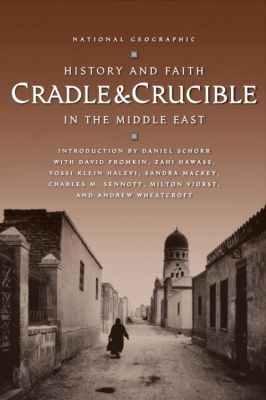
Cradle & Crucible: History and Faith in the Middle East (2002)


I signed out this book because David Fromkin was listed as an author, and I have enjoyed reading other stuff of his. Then it turned out that this was a National Geographic compilation consisting of short pieces by numerous authors, so I thought the book would be pretty much a waste of time. Turns out that it is actually a very useful overview of what we call the Middle East, tracing from earliest days, Greeks, Romans, Byzantium, rise of Islam, Ottomans, through WWI carve-up (Fromkin’s piece), founding of Israel, etc. Maps are helpful.

It is remarkable that the religious fervor of three major religions, along with associated mayhem through the ages, came from this one area. The back of the book includes a chapter on each of the religions.

Short, readable, useful.

Friday, November 03, 2006

We Shared the Peeled Orange ((letters from) Louis E. Braile, M.D.)


I was pretty much out of books and not able to get to the library, so went searching the shelves here in the house. And I found this book, which I didn’t even remember that we owned; it was a gift from my sister, Therese.

Dr. Braile, aka Papa, was a doctor from Minneapolis who did a volunteer tour on the Thailand-Cambodia border following the Pol Pot days. Many Cambodians (or Khmers) were fleeing Pol Pot or a subsequent Vietnamese invasion and trying to get into Thailand; many ended up in camps on the border hoping to secure permanent homes pretty much anywhere other than Cambodia. The camps were open for years, and conditions weren’t great.

Braile’s first tour was in 1981 when he was in 60s, and he kept going back (usually to the same border area); about a dozen times in total through 1996. Somewhere along the line he retired from his Minneapolis practice but kept returning to Southeast Asia. Obviously this must have been pretty challenging for his spouse etc.; one way they dealt with the separations was to write lots of letters.

Braile was traveling mostly under the auspices of an organization named the American Refugee Committee. I know just a bit about this organization, as Therese has worked there for a few years. Somebody at ARC or somewhere had the bright idea to compile all the letters into book form – and it works well. (Though they could have edited it down quite a bit and still gotten across the story.)

Anyway, the book comes across as an unusually effective way to get some sense of the day-to-day lives of folks that undertake these tasks. Braile talks about getting used to living in the Thailand-Cambodia border area: tracking down food (lots of pineapple and chicken-on-a-stick); dealing with snakes and insects; basic transportation via bicycle or crowded buses; heat and humidity; local restaurants (ice cream at Kim Kim’s); and on and on. Also day-to-day adventures in medicine: limited technology and resources; efforts to train Khmer medics; evacuation rules for leaving camp if Situation 2 or higher (shells landing in camp); rides in a hot, cramped ambulance where the Khmer passengers always seemed to be getting sick; the faith of the locals in IVs; etc.

I liked that the guy had a very positive way of describing the many, many challenges and difficulties he encountered in living situation and medical service. Also that he seemed very respectful of the local ways and didn’t automatically try to impose Western approaches, and genuinely took this as a learning opportunity for which he was grateful.

Well worth reading. And, TMG is acknowledged at page 326. ARC info is here.

Wednesday, October 18, 2006

A Room With A View (E.M. Forster, 1908)


Not very good, but fortunately pretty short. I liked A Passage To India, maybe because I almost always like stories premised on different cultures coming into contact. I listened to Where Angels Fear to Tread on cassette, thought the reader did a nice job and enjoyed the story. So I was looking forward to another Forster book. Unfortunately, this one had cartoonish characters and just wasn’t very interesting. The timing is interesting – in 1908 I think big chunks of upper class or aspiring-to-upper class England still lived like it was Victorian times, though changes must have been well underway (with the remnants blown away in World War I).

Forster apparently was quite impressed with Italy; this book overlapped with some of the Italy material in Where Angels Fear to Tread.

I’m done reading Forster’s stuff.

Saturday, October 07, 2006

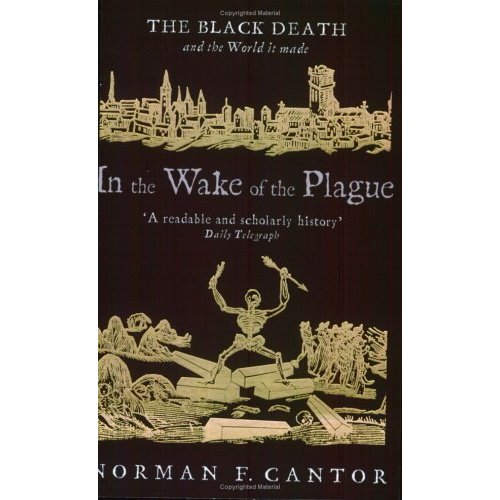
In the Wake of the Plague: The Black Death and the World It Made (Norman F. Cantor, 2001)


The topic is certainly fascinating, but I didn’t like this book all that much. Cantor goes through the history of the plague, focusing on England (which has the most extensive written record). First (and deadliest) wave of plague peaked around 1350. Sounds like the plague occurred after a period of warmer weather and population growth that had resulted in placing more marginal ground under cultivation; this was reduced for literally centuries.

The plague occurred during the course of the 100 years war, making recruitment more difficult. Labor was short, peasants made some gains economically, and some even moved up socially to yeoman status.

This author thinks it was anthrax combined with bubonic plague. There was a bunch of discussion about rats spreading the disease.

The author's bio is here.

He thinks the plague contributed to the development of modern real property law – the landed gentry suffered huge losses (sometimes resulting in several dowagers taking a portion of the income). So they needed lawyers to sort things out. Author says you could thaw out a 14th century real property lawyer, give him (it would have been a him, after all) a six-month refresher course, and put him to work today. Maybe it’s true, I don’t practice in this area. My law school course on this topic was pretty archaic.

Then the author goes off on some tangents about disease. Says bubonic plague – which did hit portions of the Roman empire in the fifth century – was largely responsible for the fall of the empire. Funny, the fella writing the book mentioned immediately below must not have been aware.

This is my second book by this author (“Inventing the Middle Ages,” discussed here) and he’s dropping down the priority list. In this one, it felt like he was forcing a cause-and-effect between the plague and all sorts of things. But then again, who knows.

Tuesday, October 03, 2006

The Fall of Rome and the End of Civilization (Bryan Ward-Parkins, 2005)


This guy was writing in response to a controversy I didn’t know existed. Apparently there are various scholars taking the position that Rome didn’t really "fall" due to "barbarian attacks." These folks wouldn’t claim that the process was entirely peaceful, but they assert that the Roman world gradually reached accommodations with Germanic folks (please don’t call them barbarians or put down their culture as compared to Rome’s) and transitioned into a different, less centralized but equally satisfactory lifestyle.

And here I had envisioned these wild Gothic types looting and pillaging and whatever (just like the cover artwork on the book), I didn’t even know an alternate view was out there.

Anyway, this author disagrees with this school of thought. He feels that the process was violent, not consensual, and ended up with a huge degradation of civilization, if more pronounced in some areas than others. All this is quite interesting, and I find his position compelling. The guy has studied lots of potsherds over the years, studied the use of tile roofs and coins, and evidence (such as it is) of the spread of writing. All this gives a pretty good picture of the extent to which some version of prosperity spread far beyond upper crust Roman society and down to the average citizen. Trade clearly was taking place all over the Roman world. After the barbarians took over, this type of evidence suggests rapid, swift disintegration (especially in the western parts of the empire).

The part about Britain was particularly interesting – because Britain was on the very edge of Roman civilization. Apparently this makes it easier to identify the influence of Roman civilization, and in turn the post-barbarian drop-off is incredibly pronounced. The author describes it as going back to the Iron Age, with a recovery period mentioned in centuries.

Something else interesting (at least to me) is that I have had some of these dates mixed up in my head. I tend to think of Rome as falling shortly after the time of Christ, when the traditional measuring date for the fall is the taking of Rome by Odoacer in 476. Roman ways no doubt survived long after that. When you think of Clovis in 511, the rapid progress of Islam via battle in the vacuum during this time, Battle of Tours in 732, Charlemagne in 800 – it really was a short leap in time between some of these developments, rather than century after century of “dark ages.”

Short, well-written, worth reading.

Monday, September 25, 2006

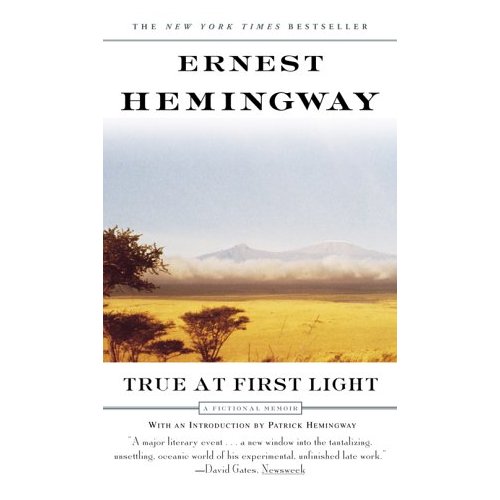
True at First Light (Ernest Hemingway, 1999 (posthumous))


Starting back in August 2005, I've gotten through For Whom the Bell Tolls, The Sun Also Rises and A Farewell to Arms. And I was ready for a break from Hemingway, but this book looked to be something different.

And it was. His son (Patrick) actually edited this for publication 35 years after Hemingway's death. It is based on experiences on safari near Nairobi in 1953. I think the manuscripts (which were extricated along with other unpublished stuff from Cuba in exchange for Hemingway's real estate) needed a lot of work, and the book is uneven. But I ended up really liking it. The book is pretty much autobiographical, though fictional. It being 1953, the old-style safari and colonial days are done for. The protagonist oscillates between his American and European mores and the African lifestyle that he seems to really enjoy. His wife kills a huge lion, using her mediocre hunting skills. He likes a native girl. They hunt and drink and talk and fly in airplanes. It's good.

Hemingway had quite the interesting life, summarized here. Injured while driving an ambulance in Italy during WW I (A Farewell to Arms gets into this). Hung out in Paris in some expatriate group after the war (The Sun Also Rises gets into this). Spent time in Spain around the time of the Civil War (For Whom the Bell Tolls gets into this). And all sorts of other things before shooting himself in the head. Of those three novels, I thought For Whom the Bell Tolls was definitely the best.

Also read this at the gym. (It's amazing how many pages you can cover during 30 minutes every other day on a stairmaster.)

Friday, September 15, 2006

Little Miss Sunshine (September 9, 2006)


Patricia and I went to this movie at Camelview back on September 9. We hadn't thought the trailer looked like much, but all three of our sons had given it the major thumbs up. So we gave it a try. And I'm glad we did. Six central characters in the extended family. I thought they all did a great job, and all the parts fit together. Greg Kinnear probably had the largest role - his character was trying to launch a lecture tour with associated books and CDs for a nine-step program on how to be a "winner." The movie opens with him doing the program with an overhead projector. Which pretty much spoke to his prospects.

His brother in law was the second best Proust scholar but let's say was working through some issues. His son had gotten into Nietzsche, and had concluded that he couldn't talk - so he communicated via handwritten notes, which was a neat device. The kid actor was effective and not annoying, which is pretty rare. Etc. My favorite scene was the dinner scene at the beginning of the movie when the characters were more or less being introduced. But there were many good moments.

Monday, September 04, 2006

Tolstoy (A.N. Wilson, 1988)


Read this lengthy biography at the gym. I took a break from reading this biography a couple monthgs ago when I unwittingly learned from it how Anna Karenina ended. I guess the biographer assumed familiarity with Tolstoy’s main works. So I went back and read Anna Karenina (discussed here) before any more of the plot was spoiled, then finished this biography.

This definitely was one of my favorite books of the year. Much more than a biography. I’ve read a ton of Tolstoy’s stuff over the years and always like it. Wilson provided all sorts of biographical information, but also much history (focused on 19th century Russia) and plenty of opinions on all sorts of topics. I like his writing a bunch. (Also read “The Victorians” last year and have “After the Victorians – The Decline of Britain in the World” signed out of the library (this could be an interesting follow-on to the 1759 book in the post immediately below.)

Some things I wanted to remember:

--Tolstoy’s long life – he was writing at Sebastopol during the Crimean War in 1854, and finally died in 1910 just a few years before Revolution in 1917. Went through the liberation of the serfs in 1861 and all the late 19th-century Tsarist repression etc.

-- Aristocratic blood, so he had access to top levels of society all the way up to the Tsarist household. Yet ran his mouth (or wrote pieces) against Orthodox Church, government methods, private property, war; and in favor of rights of serfs, etc. – things that would have sent anyone less famous or less connected straight to a labor camp in Siberia.

-- Inconsistencies all over the place. Aristocrat but tried to identify with the serfs. Denounced private property yet lived well and satisfied his scruples by licensing property to his wife. Made his own shoes, espoused simple food, etc.

-- Eventually excommunicated by Orthodox church; his followers ("Tolstoyans") made his views almost into a religion (and something he probably would have had trouble recognizing).

-- Interacted with many, many leading figures. Gandhi picked up ideas re nonviolence. Chekhov and Gorky stayed with him in his last years. Loved reading Dickens. Competitive with Dostoyevsky. On and on.

-- Communists probably could have used many of his ideas and his persona for PR, but couldn’t figure him out. He was against private property but didn’t like what they were doing either. Lenin was in the same town as Tolstoy when Tolstoy was doing some wonderful famine relief work in 1891; Lenin was one of the few that refused to assist (in the belief that the more deaths and suffering, the faster the revolution could come).

-- This guy named Chertkov who competed with Tolstoy’s wife for access and publishing rights, etc. Strange.

-- Wife put up with his idiosyncrasies (though I guess she had her own) and was key to getting the works done, published, organized.

--His incredible fame and stature in and out of Russia. His novels that make him famous today were 50 years old by the time he died, and everyone knew him but not for those books.

Wikipedia bio is here.