"To compensate a little for the treachery and weakness of my memory, so extreme that it has happened to me more than once to pick up again, as recent and unknown to me, books which I had read carefully a few years before . . . I have adopted the habit for some time now of adding at the end of each book . . . the time I finished reading it and the judgment I have derived of it as a whole, so that this may represent to me at least the sense and general idea I had conceived of the author in reading it." (Montaigne, Book II, Essay 10 (publ. 1580))

Thursday, August 17, 2006

The House of Mirth (Edith Wharton, 1905)


A few months ago I had read a collection of Edith Wharton’s short stories and novellas between 1911 and 1937 (here’s a link to that book). I didn’t know a thing about Edith Wharton (photo to left) and liked the short stories quite a bit. She was a society person that lived in wealth on both sides of the Atlantic; somewhat like Hemingway, she worked an ambulance during WW I. I liked the stories; many dealt with the foibles in the “high society” in which she lived; a few had WW I themes; a few were very imaginative (for example, one was about a castle where murdered dogs came back to take down their oppressor).

So I decided to try a full-length novel, The House of Mirth. I listened to this in the car (10 cassettes, 13.5 hours). Started slowly, but was worth finishing. The heroine, let’s say, is a beautiful but relatively poor woman named Lily Bart; she was orphaned in her teens and lives with her aunt. She has a great touch for hanging out with wealthy society types but blows it when it comes to landing a wealthy husband, gets disinherited, blows it again with the love of her life (a comfortable-but-not-wealthy lawyer), gets ostracized by her erstwhile society buddies, and things go downhill from there. Notwithstanding, I liked it. Amazon posts customer reviews here; a biography on Edith Wharton is here.

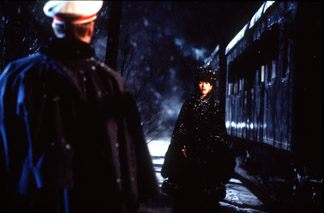
I hadn’t realized that a movie was made out of this book in 2000 with some fairly well-known folks. Gillian Anderson of X-Files fame (middle photo) played Ms. Bart; Dan Ackroyd played the slimy Gus Trenner. Having read the book, I’d be interested in seeing the movie. It’s reviewed here.

Tuesday, August 01, 2006

Anna Karenina -- Leo Tolstoy


I read this novel at the gym in 30-minute sessions on the Stairmaster. So it took a little over two months. And well worth it. In addition to being a fantastic author, Tolstoy is a larger-than-life character in his own right.

I’m not sure how to compare, but many folks seem to think Anna Karenina is Tolstoy’s greatest novel. (It was published between 1875 and 1877, after War and Peace and before he started getting preachy.) He takes 900+ pages going over seven main characters (Anna Karenina and Aleksey Karenin, Dolly and Stiva Oblansky, Konstantin Levin + Kitty, Vronsky) and, through them, revealing so many dimensions of married love, family life, the consequences of infidelity, and much more.

The most interesting character is probably Konstantin Levin (perhaps portrayed sympathetically because the character is so obviously based on Tolstoy himself, as this biography by A.N. Wilson explains). Supposedly Tolstoy actually wrote expressions of love with chalk on a tablecloth to his wife-to-be (just as Levin does with Kitty Shcherbatskaya). Like Levin, Tolstoy gave his diaries to his wife right after the wedding (though Tolstoy’s diaries caused much more disruption than the diaries in Anna Karenina). Like Tolstoy, Levin is an aristocrat who enjoys working on his estate in the country rather than hanging around in Petersburg (or even Moscow) society. The deathbed scene involving Levin’s brother mirrors Tolstoy’s own brother’s death. Levin, like Tolstoy, tried to run schools for the peasants on his estate. Etc.

I understand that Levin didn’t even appear in the first draft of the story, which focused on the title character. The book was published in installments in a Russian magazine, and the story ran off in different directions over the course of several years. But the parts work.

Tolstoy has a way of making his characters ridiculously realistic. When reading his things, I constantly have the reaction “yes, that’s how people, including me, really think or feel about things.” His description of going to meet Kitty Shcherbatskaya at the skating rink when he was in love with her but completely uncertain whether he “had a chance” is dead on. His descriptions of mowing hay with the peasants, the interactions with Kitty, the politicking among the Russian gentry, etc. are thoroughly enjoyable.

The novel has been filmed many times, typically with big-name leads. Details about the book are here.

By the way, the novel begins with one of its most quoted lines, "Happy families are all alike; every unhappy family is unhappy in its own way." A Tale of Two Cities, described below, also had a pretty famous opening line ("It was the best of times, it was the worst of times").

Friday, July 21, 2006

A Tale of Two Cities Charles Dickens)

Somehow I had missed reading this book all these years, and finally finished it on Wednesday. I can understand why the story has had such staying power – memorable characters set against the French revolution. The plot lines involve all sorts of links and coincidences among a group of folks, and sometimes this felt a bit forced. I think the story would have worked fine without all the links; for example, Madame DeFarge with her knitting would have been a great character without the link that is revealed in the last part of the book. The Sydney Carton stuff at the end is quite nicely done. It’s all nice, though more melodramatic than would be acceptable today.

Dickens does a great job communicating the atmosphere in France in the days of the Terror (at least as someone who wasn’t there writing for readers who weren’t there either). He describes some of the perks enjoyed by the nobility over the years at the expense of the peasantry in a way that explains some of the ensuing butchery on a more visceral level. Details about the story are here.

I didn’t really appreciate how popular Dickens was, and is. Read this for more.

Saturday, July 15, 2006

Dead Souls - Nikolai Gogol


Gogol was writing just a bit before the likes of Tolstoy and Dostoevsky. I don't know enough about Russian literature to know where he fits in. But I liked "Dead Souls" a lot. The lead character - Pavel Ivanovich Chichikov - is a hoot. The guy traverses the provinces of Russia trying to buy up dead "souls" - meaning serfs that had died but whose death was not yet recorded on the tax records. Owners of these souls would benefit by not having to pay taxes on them; Chichikov planned to borrow against the souls before the lender figured out that they no longer existed.

Gogol shows Chichikov's interactions with provincial landholders and local government officials - all quirky folks; he was interested in showing bureaucratic bungling and corruption, local vanities, etc. Chichikov is funny - he keeps professing his desire to be honest and have a family, but keeps backsliding into one scheme after the other. He has but two live serfs - his drunken coachman, and his flunky with the bad odor.

Gogol planned additional parts to the story. The second part isn't finished. He fell in with some religious fanatic and burned the near-final manuscript. The second part has been reconstructed in part from earlier drafts.

Here's an article about Gogol, and a separate article focused on "Dead Souls."

What I'm Doing Here

I like movies, concerts, books, etc. As noted in the header above, I'm tired of seeing, hearing or reading something and very quickly losing track of it. A few years ago I started keeping some notes on books and movies. After working the GalesAz blog for awhile, I recognize that this is an easier place to store this kind of information.

If I can figure out an easy way to import the earlier information, I will do so. In the meantime, here is a movie and book note from GalesAz. Future review-type items will appear here. We have fallen out of the habit of going to movies but perhaps this will pick up as my movie-buddy is now through with school and getting through her job orientation phase. I do read steadily, mostly when working out on the stair machine or by listening to books-on-tape when driving around, plus bits and pieces of reading at the house or when traveling.

Anyway, this blog is designed for me to have quick reference to things I want to keep track of. Not likely to be of much interest to others.

Saturday, May 20, 2006

My Hitch in Hell: The Bataan Death March (Lester Tenney, 2000)

Enlisted man from Chicago is part of surrender in the Philippines. Bataan Death March, prison camps in the Philippines and Japan.

Quick read, interesting. The author - later a professor at ASU - was quite the operator - ran entertainment, gambling, prison black market, etc.

But the focus is on the awful conditions in which these POWs tried to function. The book is very good at describing this.

Monday, May 15, 2006

The Stranger and the Statesman (Nina Burleigh, 2004)

Gift from my five children purchased during the trip by four of them to visit KHG in DC.

Biographical information on James Smithson - illegitimate son of English nobility - who left his estate to the U.S. Ex-president John Quincy Adams played the lead role in seeing that the estate (bags of gold) was used to build what became the Smithsonian.

Not many specifics available on Smithson himself (mostly due to an untimely fire), but the book does an interesting job of portraying early 19th century America and contrasting it to Europe.

Nobody seems to know why he gave the money to the U.S. Apparently he didn't have any heirs to cut out.

Tuesday, May 02, 2006

Joseph Smith - The Making of a Prophet (Dan Vogel, 2004)


Lots of detail about Smith’s early life in New York, treasure seeking, “finding” the plates, “translating” the plates, etc. Apparently treasure-seeking was not all that uncommon in early 19-century NE; when the treasure wasn’t found, it was blamed on spirits guarding it or other miscues that caused the treasure to slide away through the earth. Translation ended up being done through the seer stone (in a hat) so that it wasn’t necessary to keep the plates around the house (visitors threatened to burst in and confirm its existence, or not). No one saw the plates except with spiritual eyes. Many revelations and visits from angels and others. Book ends as they relocate to Ohio.

Monday, May 01, 2006

Last Citadel: A Novel of the Battle of Kursk (David L. Robbins,

I like Robbins' World War II novels (such as The War of the Rats and The End of War). This one is set in the battle of Kursk, which is described as history's largest tank battle. Hitler was trying to retake initiative after the failure in Stalingrad - effectively his last gasp on the eastern front. Relying heavily on the huge, powerful, but long-delayed Tiger tank; outdone by Soviet T-34s.

Berko family - Cossack father with Communist son man a tank while daughter is a Night Witch. Spanish SS officer comes from Spanish Civil War and fights for Nazis. Breit is working to overthrow Hitler. Partisan fighting.

The Tiger tank stories are interesting - awesome weapon but overdone to the point of impractical.

Saturday, April 01, 2006

Complete Stories 1874-1884 (Henry James)

Gave up after 600 of 800 pages. The stories were very similar after awhile, mostly about high society folks moving between America (i.e. NY, Boston and environs), Paris, London; pointing out differences, foibles.


I've since read a bunch more about James (and his brother William) so should go back to these.

Wednesday, March 15, 2006

The Seamstress (Sara Tuvel Bernstein, published posthumously in 1997)

Holocaust memoir.

Unusual – this was a Romanian Jewish woman who lived through shortages and mistreatment in her home village and in Bucharest and Budapest (where she in fact worked as a seamstress) before being sent to labor camps and concentration camps and barely surviving.

The writing style is odd – structured as exact narratives and events over the years. The book probably was published only because Edgar Bronfman became interested. But in the end the style and the sincerity are the book’s strengths and it’s well worth reading. The Holocaust stories are just beyond belief
.

Wednesday, March 01, 2006

A Farewell to Arms (Ernest Hemingway, 1929)

This tells the story of an American serving as an ambulance driver on the Italian front in WW I. He falls in love with an English nurse; she attends him following an injury and they fall in love.

He returns to the front, but the Germans overwhelm the Italians and the protagonist eventually deserts as he figures out that scapegoats are being sought. Finds the nurse, and they cross the border into Switzerland.

I liked it, but not nearly as much as For Whom The Bell Tolls.

Wednesday, February 15, 2006

The First Circle (Aleksandr Solzhenitsyn, released 1968)

Excellent - one of my favorite books. Solzhenitsyn is simply wonderful.

A bit hard to follow with so many characters, but it’s well worth the effort.

Perspective of prisoners without hope. Even though special prison for the technically skilled.

Many powerful scenes but I think the best was when Nerzhin’s wife visits him – the effect on her, and him.

Camaraderie, tensions among the sharaskas. Their endless discussions, filled with literary/learned references. Zek life. References to WWII. Stalin and the other officials – their own terrors. Working on the encoder (Rubin).

Wednesday, February 01, 2006

Gulliver's Travels (Jonathan Swift, 1726)

Finally caught up with this classic. The objects of the author's satires can be guessed at somewhat but it would be helpful to have footnotes or some other form of readers' guide to assist.

Lilliput; Brobdingnag; the floating government; the marvelous Houyhnhnms; the repulsive Yahoos; etc.

Didn't do much for me.

Sunday, January 15, 2006

The Making of Revolutionary Paris (David Garrioch, 2002)

Daily life details from 18th century Paris – influence of Enlightenment, Jansenism, shifts from corporate bodies to individual rights; opening boulevards and public spaces to permit air to circulate; adding house numbers; centralized authority; etc. Interesting and worth reading.